Preventing Tear-Out When Routing Purpleheart Wood Edges
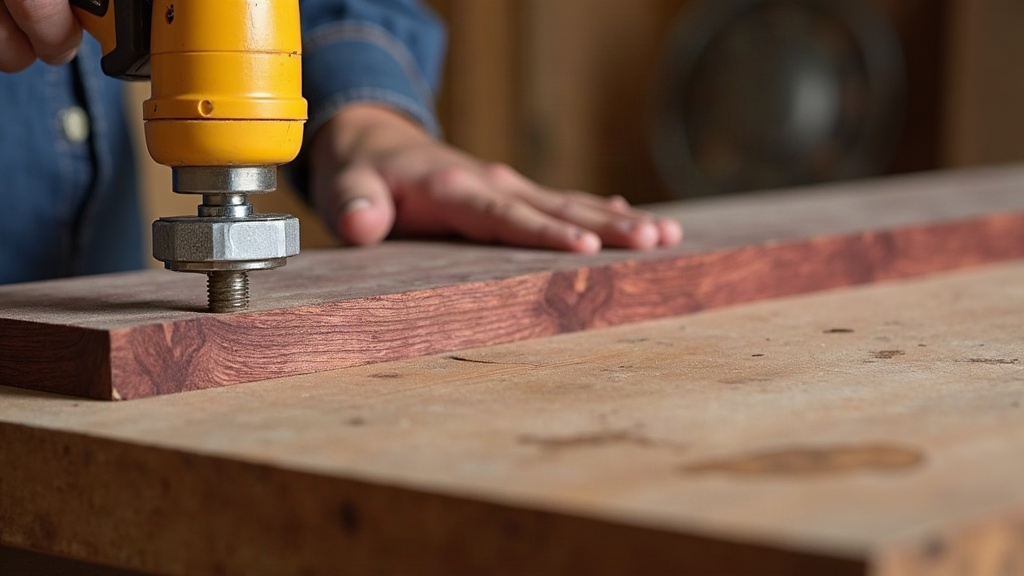
Purpleheart is one of those woods that looks gorgeous on a slab and then absolutely humbles you the moment you fire up the router. That violet color and the sheer toughness of the material make it a favorite for cutting boards, furniture accents and inlay work, but the grain fights you every step of the way. Because the fibers twist and interlock rather than running in one tidy direction, this wood is notoriously hard to machine cleanly. Preventing tear-out when routing purpleheart edges isn’t something you can wing the way you might with pine or soft maple. You need sharp tooling, small bites of material at a time, and a real feel for which way the grain is running before the bit ever touches the wood.
Why Does Purpleheart Wood Tear Out So Easily?
Before you can fix the problem, it helps to know what’s actually happening under the bit. Purpleheart (botanically Peltogyne) grows with a naturally interlocked grain structure. Instead of fibers running parallel like a bundle of straws, they weave back and forth through the board, sometimes reversing direction every inch or two.
When a spinning bit hits one of these direction changes, it doesn’t slice cleanly. It catches the end of a fiber and acts more like a tiny pry bar, lifting a chunk of wood away from the surface instead of shearing through it. Now add in the fact that purpleheart is genuinely hard (it sits around 2,520 lbf on the Janka scale, well above red oak’s 1,290). Pair that density with a dull bit or too aggressive a pass and you’ll get chunky, ugly tear-out almost every time.
Essential Techniques for Smooth Purpleheart Edges
The good news: none of this is unsolvable. You just have to slow down and adjust your approach. Here’s what actually works in the shop.
1. Upgrade Your Router Bits
Plain straight-flute bits are basically the worst tool for this job. They chop rather than slice, and on interlocked grain that chopping motion is exactly what causes splintering. Swap them out for:
- Solid Carbide Spiral Bits: These keep continuous contact with the wood and use a shearing cut instead of a chopping one. An up-cut/down-cut compression bit is about as close to a guarantee as you’ll get for clean edges on both faces of the board at once.
- Shear Angle Bits: For profile cuts like round-overs or chamfers, look for bits ground with a built-in shear angle. That slight diagonal slicing action cuts down dramatically on the lifting force that rips fibers loose.
- Keep it Sharp: A $40 bit that’s gone dull will tear out purpleheart just as badly as a cheap one. Clean the flutes with pitch remover, get bits professionally sharpened, or honestly, just buy a fresh one before you start a purpleheart project. It’s cheap insurance.
2. Take Multiple Shallow Passes
The number one mistake I see (and have made myself) is trying to hog out the whole profile in a single pass. That much pressure on interlocked grain is asking for trouble.
- Limit each pass to about 1/16 inch (roughly 1.5mm) of material.
- On your final pass, shave off almost nothing, just a whisper-thin layer, enough to leave a glassy edge with no fuzz or chip marks.
3. Read the Grain and Route “Downhill”
Look closely at the grain lines on the edge before you make a single pass. You want the bit’s rotation pushing fibers down into the board, not lifting them up and away. Woodworkers call this cutting “downhill.” Purpleheart being purpleheart, the grain will often reverse direction partway down a single edge. When that happens, stop, flip the board around, and finish the cut from the other end. Fighting the grain direction is a losing battle no matter how sharp your bit is.
4. Utilize Climb Cutting (With Extreme Caution)
In a normal cut, you feed the router against the bit’s rotation. Climb cutting flips that: you move with the rotation instead. Because the bit is now pushing fibers inward rather than prying them outward, this technique is genuinely one of the best tools for preventing tear-out when routing purpleheart edges.
Safety Warning: it’s also one of the more dangerous techniques out there, because the bit wants to grab the wood and yank the router forward on its own.
- Never take a deep climb cut.
- Only remove 1/32 inch or less at a time.
- It’s far safer to do this on a router table with solid featherboards and push blocks than freehand with a handheld router. Give the bit an inch of unplanned travel and you’ll know exactly why this warning exists.
Managing Router Speed and Feed Rate
Purpleheart doesn’t just tear out easily, it scorches easily too, thanks to its natural resins and density. Finding the balance between RPM and feed rate (how fast you push the wood through) makes a real difference.
- Feed too fast and the bit chops instead of slicing, causing tear-out.
- Feed too slow and friction builds up fast, leaving those dark, stubborn burn streaks that are a pain to sand out.
- The Fix: Drop your speed a bit, somewhere around 16,000 to 18,000 RPM for a medium-sized bit, and keep a steady, even feed rate the whole way through. Don’t pause mid-cut. Even a half-second hesitation is enough to leave a burn mark or a chip.
Additional Tricks to Eliminate Splintering
Still getting a little chip-out on corners or end grain? These old shop tricks help clean things up.
- Use a Backer Board: Clamp a scrap piece tight against the trailing edge whenever you’re routing end grain. It supports the fibers right as the bit exits the cut, which is exactly where blowout tends to happen.
- The Tape Trick: Burnish a strip of blue painter’s tape firmly along the edge before routing. It sounds too simple to work, but the tape physically holds the surface fibers together while the bit passes through.
- Pre-Score the Line: For rabbets or long straight cuts, score the cut line first with a marking gauge or a sharp utility knife. That severs the top fibers ahead of time, so the router has a clean boundary instead of tearing through unsupported wood.
Conclusion
Exotic woods always demand a little more patience, and purpleheart is right at the top of that list. Sharp shearing bits, shallow passes, careful attention to grain direction, and a well-managed feed rate will get you there. Preventing tear-out when routing purpleheart edges really does come down to one simple idea: slow down, let the bit do the slicing it was designed for, and don’t rush the job just because the clock is ticking in your shop.