Micro-Bevel vs Flat Bevel Sharpening for O1 Tool Steel Plane Irons
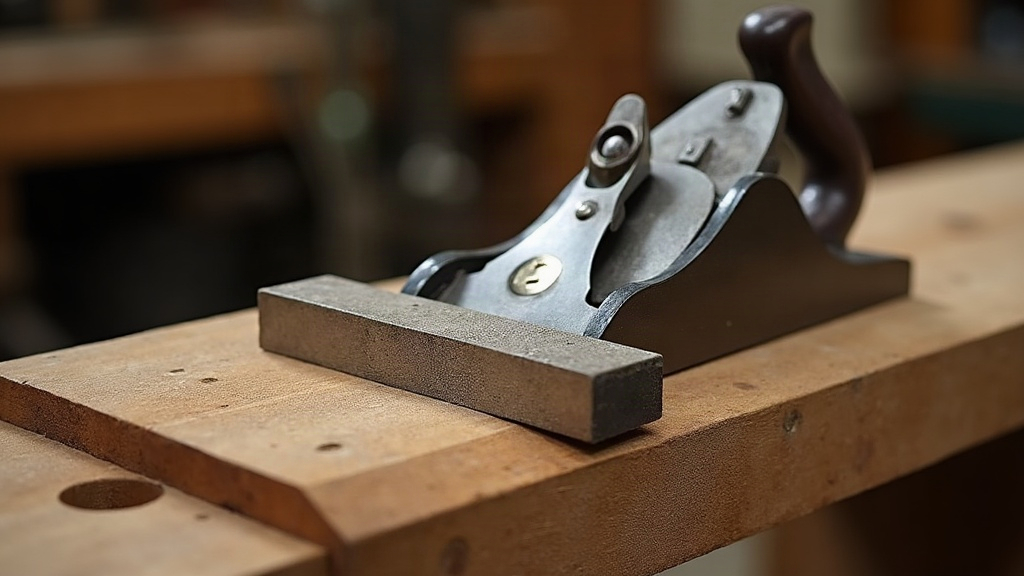
Micro-Bevel vs. Flat Bevel on O1 Tool Steel Plane Irons
If you sharpen O1 tool steel bench plane irons on a regular basis, the micro-bevel vs. flat bevel question isn’t just academic. It actually changes how you work. A micro-bevel adds a tiny secondary edge angle, usually 2 to 5 degrees steeper than the primary bevel, while a flat bevel means honing the whole bevel face as a single continuous angle. With O1 steel in particular, a carbon steel loved for its fine grain and easy sharpenability but modest wear resistance, the choice you make affects how often you’re back at the stones, how crisp the edge stays, and how much metal disappears every time you touch it up.
Why O1 Steel Changes the Calculation
O1 is a water-hardening, oil-quenched tool steel you’ll find in a lot of vintage and premium plane irons (Hock, older Stanley and Record blades, the LV O1 option). Thanks to its fine carbide structure, it takes an edge almost absurdly fast. The catch? It also dulls quicker than modern alloys like A2, PM-V11, or HSS, mostly because of lower wear resistance and chromium content.
That trade-off is basically the whole reason bevel style matters here:
- O1 sharpens fast, so grinding a full flat bevel isn’t the chore it would be on A2 or a powdered steel.
- O1 dulls faster, which means frequent touch-ups are part of the deal. A micro-bevel makes those touch-ups much quicker.
What a Micro-Bevel Actually Does
A micro-bevel is a narrow secondary facet honed at a slightly steeper angle than the primary bevel. Say, a 25° primary bevel paired with a 30° micro-bevel.
Advantages for O1 irons:
- Faster touch-ups. You’re honing a sliver of steel, often 20 to 30 seconds on a fine stone, rather than reworking the entire bevel face.
- Stronger edge geometry. That extra couple of degrees adds support right behind the cutting edge, which helps make up for O1’s weaker wear resistance.
- Less steel wasted. Sharpening after sharpening, you keep more of the iron’s length intact, which matters a lot on vintage blades that don’t have unlimited life left in them.
- Easier honing guide consistency. Most guides register off the primary bevel, so bumping the angle up a couple degrees for the micro-bevel pass is almost mechanical.
Trade-offs:
- A touch more resistance in very hard or figured wood, since the steeper micro-bevel angle slightly increases cutting force.
- Over many sharpenings the micro-bevel tends to widen. Eventually you’ll need to re-flatten the primary bevel on a coarser stone.
What a Flat (Single) Bevel Does
A flat bevel runs as one continuous angle from edge to heel, typically 25° or 30° on bench plane irons.
Advantages for O1 irons:
- Simplicity. One angle, nothing to second-guess about where a micro-bevel should start.
- Cleaner geometry for fine paring or shooting-board work, where a crisp, low-angle edge beats raw durability.
- No bevel creep to manage. The whole face stays flat and predictable, full stop.
Trade-offs:
- Every sharpening session means working the full bevel, and on O1 (softer, dulls faster) that translates into more frequent, more time-consuming stone sessions.
- Slightly less edge support at acute angles, which can bite you in interlocked or resinous hardwoods.
Which Should You Use on O1 Plane Irons?
For most bench plane work, jointing, smoothing, general stock prep, a micro-bevel is the better everyday answer on O1 steel. It plays to O1’s fast-sharpening nature (set the primary bevel once, mostly leave it alone) while compensating for its weaker wear resistance with a bit more edge support and dramatically faster maintenance honing.
Reach for a flat bevel when:
- You want the absolute keenest edge possible, for end grain, shooting boards, or final smoothing passes.
- You sharpen freehand, no guide, and find holding a consistent micro-bevel angle genuinely fiddly.
- You’re working a blade that already has heavy bevel wear and needs a full regrind regardless.
Practical Setup Recommendations
- Primary bevel: 25° (the standard starting point for O1 bench plane irons).
- Micro-bevel: 30°, honed on a fine stone (8000 grit water stone or similar) for about 10 to 15 strokes.
- Re-flatten the primary bevel every 8 to 10 touch-ups, or whenever the micro-bevel has visibly crept past roughly 1mm wide.
- Stropping: a handful of passes on a leather strop loaded with honing compound, done after the micro-bevel pass, noticeably extends O1’s edge life. It strips off the microscopic wire edge without adding any new bevel geometry.
Conclusion
On O1 tool steel bench plane irons, the micro-bevel approach wins out for day-to-day use. It takes advantage of how easily O1 sharpens while shoring up its faster dulling with quick, targeted touch-ups and a slightly tougher edge angle. Save the flat bevel for jobs that demand the sharpest possible edge, or for blades that need a full regrind anyway. Either way, know your angles, keep your stones flat, and let O1’s forgiving nature do the work for you instead of against you.