Japanese Pull Saws vs. Western Backsaws for Dovetail Joints
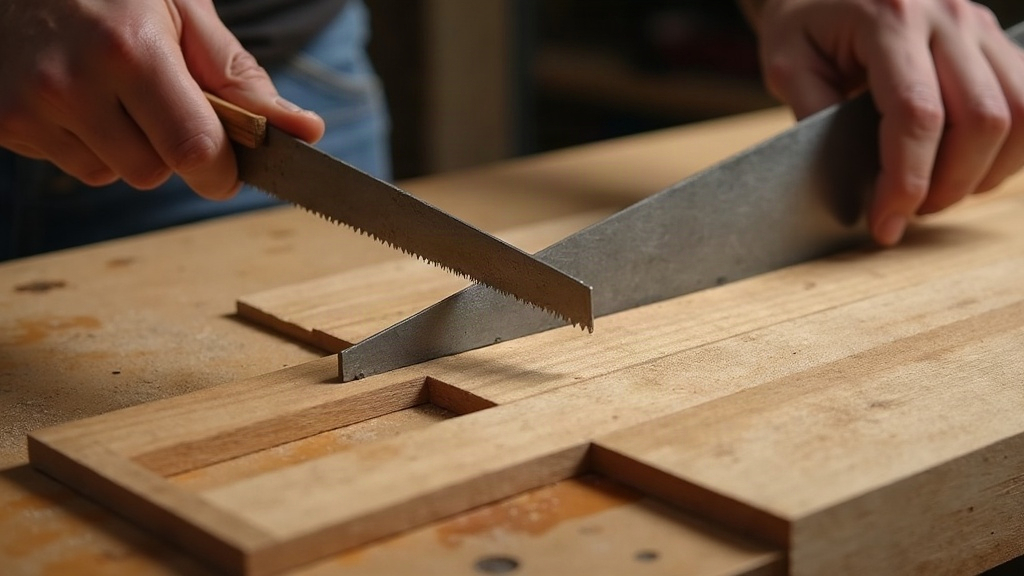
If you’re cutting your first dovetails, the saw you pick up matters almost as much as how you hold it. Japanese pull saws (think dozuki) cut on the pull stroke, with blades so thin and flexible they leave a whisper of a kerf. Western backsaws go the other way: push stroke, stiffer blade, a metal spine riveted along the top for backbone. For most beginners, the Japanese saw is the gentler teacher. It forgives more and rewards less muscle. But the Western backsaw builds a kind of control that pays dividends later. Let’s break down why.
How the Two Saws Actually Differ
Cutting Direction and Blade Design
A Japanese pull saw (dozuki, ryoba) does its work as you draw it back toward your body. Since the blade is in tension during the cut rather than being pushed, it can be ground much thinner, often somewhere between 0.3mm and 0.5mm, without folding on itself. Thinner steel means a narrower kerf, less wood turned to dust, and less friction fighting you on every stroke.
A Western backsaw (dovetail saw, tenon saw) works the opposite way, cutting on the push. To stop that thin blade from buckling under compression, it needs a stiff spine of brass or steel running along the spine edge. That’s why these saws feel heavier in hand, and why the blade itself runs thicker, usually 0.6mm to 0.9mm.
Tooth Geometry
- Japanese saws: Many have three cutting edges ground into each tooth (rip, crosscut, and a top bevel), so a single blade can handle both rip and crosscut duty without too much complaint. The teeth are typically impulse-hardened. They hold an edge a long time, but once dull, that’s it, you swap the blade rather than sharpen it.
- Western saws: These are usually filed rip-style (which is what you want for dovetails anyway, since you’re cutting with the grain). The traditional versions can be resharpened indefinitely, which appeals to anyone who likes the idea of owning one good tool for thirty years instead of replacing it.
Why Beginners Often Find Pull Saws Easier
- Straighter cuts with less effort. Tension keeps the blade honest. You’re not muscling it through the cut, so there’s less temptation to bow it off-line.
- Lighter weight, better feedback. A thin dozuki blade telegraphs everything back through your hand. You’ll feel the cut start to wander well before your eyes catch it.
- Narrower kerf. Less waste, tighter joints, and that matters a lot when your layout lines and saw control are still shaky.
- Lower cost of entry. A solid dozuki, a Gyokucho or Suizan with a replaceable blade, usually runs $25 to $45. Compare that to a decent Western dovetail saw and it’s not close.
Why Many Experienced Woodworkers Prefer Western Backsaws
- Sawhorse and vise stability: Push-stroke sawing shines when the workpiece is clamped low in a vise, which happens to be the classic Western dovetailing stance.
- Durability: A well-made Western saw, say a Lie-Nielsen, Veritas, or Bad Axe, can get sharpened over and over for decades. Impulse-hardened Japanese teeth simply can’t make that promise.
- Heft for larger stock: Once you’ve built up the muscle memory, that stiffer blade and extra mass behind every stroke actually feels steadier in thick hardwood, not clumsier.
Which Should You Buy First?
New to hand-cut dovetails? Start with a Japanese dozuki. You’ll learn to saw to a line faster, your mistakes stay small thanks to that narrow kerf, and the price tag won’t keep you up at night. A 9 to 10 inch dozuki with a hybrid rip/crosscut tooth is a solid, common first pick.
Already got some sawing hours under your belt (even from power tools or general shop projects), and thinking long-term? A Western dovetail saw with rip-filed teeth at 14-16 TPI is worth the bigger check, somewhere in the $120 to $250 range for a quality brand. You’ll be resharpening that same saw twenty years from now.
A Practical Middle Path
Plenty of experienced furniture makers just own both: dozuki for the fine joinery, Western saw for general bench work. Nothing says you can’t switch camps later. Honestly, the best move is trying both at a local woodworking store, or borrowing one at a club meeting, before you spend a dime.
Quick Comparison
| Feature | Japanese Pull Saw | Western Backsaw |
|---|---|---|
| Cutting stroke | Pull | Push |
| Blade thickness | Thinner (narrower kerf) | Thicker (more rigid) |
| Resharpenable | Usually no (replaceable blade) | Yes |
| Learning curve | Gentler | Steeper |
| Typical price (quality) | $25-$60 | $100-$250 |
| Best for | Beginners, fine joinery | Long-term investment, heavier stock |
Conclusion
Neither saw wins outright. They’re just two different answers to the same problem. If you’re a beginner chasing clean, accurate dovetails without fighting your own tool, the Japanese pull saw is the friendlier, cheaper place to start. Once your sawing hand matures, a quality Western backsaw earns its spot in the till as a long-term investment. Try both if you get the chance, but don’t let the decision stall your practice. Sawing to a line, over and over, matters more than which saw sits in your hand while you do it.