5-Cut Method: Square a DIY Crosscut Sled to 0.001 Inches
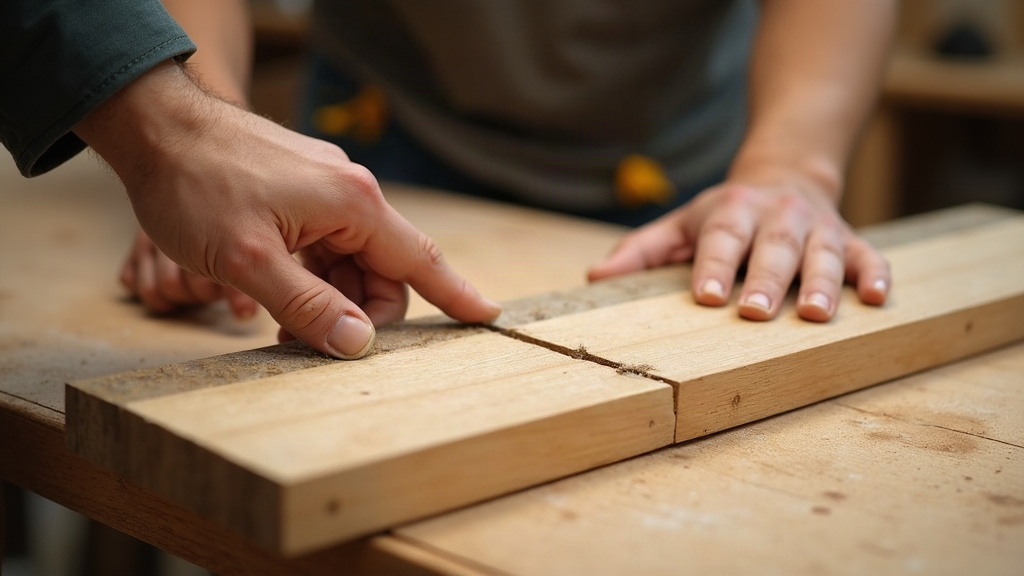
A crosscut sled is only as good as its fence alignment. And here’s the annoying part: even a fence that looks perfectly square can be off by a few thousandths of an inch. That’s more than enough to wreck a tight joint. The 5-cut method is the most precise, tool-independent way to square a DIY crosscut sled. You can dial in accuracy down to 0.001 inches using nothing fancier than a tape measure or a set of digital calipers.
Why Squares and Protractors Aren’t Enough
Combination squares, speed squares, even pricey engineer’s squares all carry their own small margin of error. Cut a 12-inch wide panel and an error of just 1/64 inch at the edge of your square shows up as a visible gap at the far end of the board. The 5-cut method sidesteps this entirely. Instead of trusting an outside tool, it uses the sled itself, plus some basic arithmetic, to find and fix any error no matter what you used to build it in the first place.
What You Need
- A completed crosscut sled with a fence already attached (doesn’t need to be perfectly square yet)
- A scrap board at least 12 to 16 inches wide and roughly square
- A pencil or marking knife
- A ruler, dial caliper, or digital calipers that can read down to 0.001 inches
- A basic calculator
The 5-Cut Method, Step by Step
Step 1: Mark and Cut Side A
Set your test board against the sled fence and label one edge “A.” Make a crosscut, trimming off a thin strip. Don’t flip the board yet. Just set it aside, noting mentally which edge was against the fence.
Step 2: Rotate and Repeat Four Times
Here’s the heart of the whole method:
- Cut edge A.
- Rotate the board 90° clockwise, keeping the same face up, and cut again. This becomes edge B.
- Rotate another 90° and cut. That’s edge C.
- Rotate another 90° and cut. That’s edge D.
- Rotate one final time and make a fifth cut, shaving off a thin sliver (1/8 inch or less) from the original edge A side.
By the time you finish that fifth cut, each cut has been referenced off the one before it. Any squaring error gets multiplied roughly four times over, which sounds bad but is actually the whole trick: a tiny, hard-to-detect error becomes big enough to measure with confidence.
Step 3: Measure the Offset
Grab your calipers and measure the length of that final cut edge at both ends. On a perfectly square sled, both numbers match exactly. Any gap between them, even something as small as 0.002 inches, is the compounded error from all four cuts talking to you.
Step 4: Run the Formula
Use this to calculate your correction angle:
Correction = (Difference in measurements ÷ Length of the cut) × (Board width ÷ 4)
In practice, though, most woodworkers just use the shortcut version:
Adjustment at fence end = Measured difference ÷ 4
That number tells you exactly how far to shim or nudge the fence’s attachment point to kill the error.
Step 5: Adjust the Fence
- Fence held with screws in slotted holes? Loosen them a touch and tap the fence in the direction your math pointed to.
- Fence glued or fixed in place? Slip a thin shim behind one end before retightening. A strip of regular printer paper is about 0.004 inches thick, handy for small corrections.
Step 6: Re-Test
Run the 5-cut test again. Most sleds land within that 0.001-inch window after two or three rounds of tweaking.
Common Mistakes to Avoid
- Flipping the board instead of rotating it. This cancels the error out rather than stacking it, which defeats the entire point of the test.
- Using a warped or non-flat test board. Even a little cupping will throw your numbers off.
- Measuring with a regular tape measure. You need caliper-level precision to catch anything in the thousandths.
- Cranking down the fence screws before you’ve confirmed the final result. Lock everything in place only after a successful last test.
Final Thoughts
The 5-cut method turns sled squaring from a guessing game into something closer to a lab procedure. Since it leans on your own sled’s cuts rather than an outside square, it corrects itself and gets you shockingly precise results, which matters a lot if you build cabinets, boxes, or anything that depends on gap-free miters. Fifteen minutes with this test, done once properly, and your sled will keep cutting dead square for years.